Experiences

Safari Adventures

Four encounters that define Tanzania — from the thundering river crossings of the Serengeti to the silent, spotlight-lit darkness of Tarangire after dusk.

01

The Great Wildebeest Migration

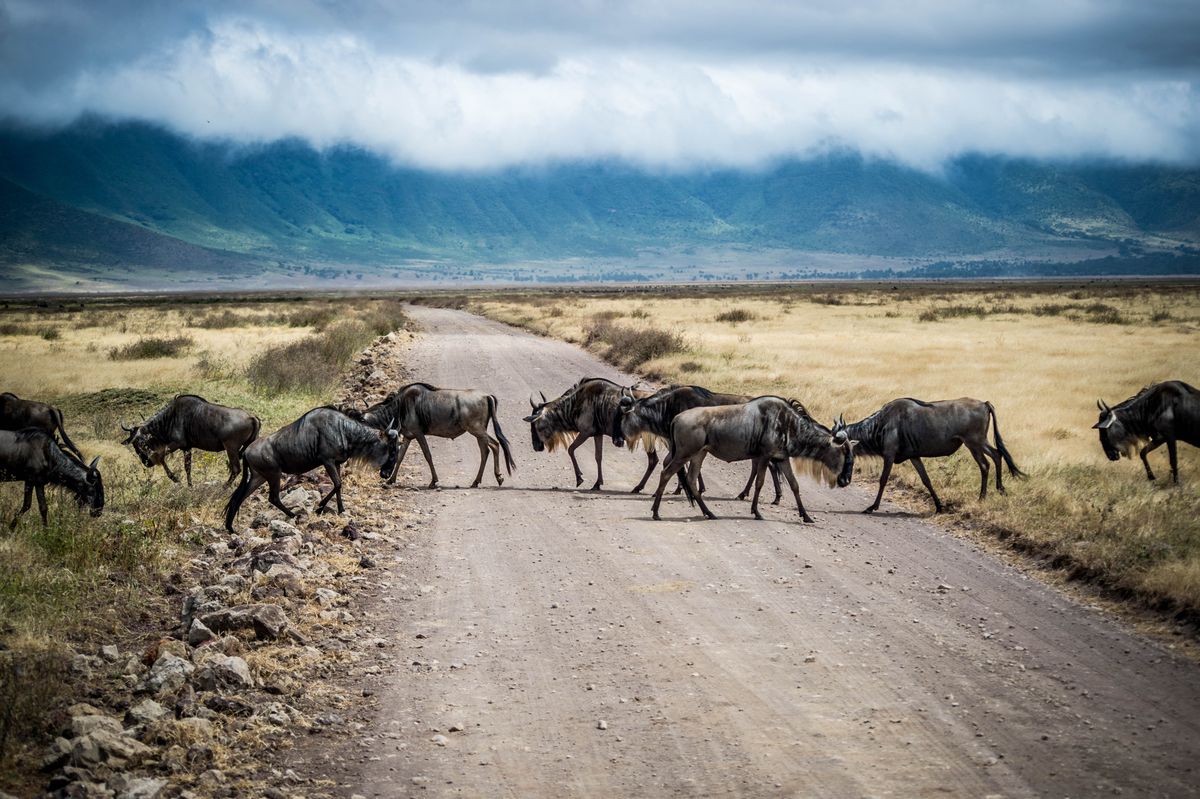
Wildebeest crossing during the Great Migration

There is no preparation adequate for the sound. Before you see a single animal, you hear it — a low, rolling thunder that builds across the plain until the earth itself seems to be moving.

Every year, approximately 1.5 million wildebeest, accompanied by 200,000 zebra and 300,000 Thomson's gazelle, complete a 1,800-kilometre circuit between the Serengeti and Kenya's Masai Mara. They do it not because they navigate, but because they follow the rain — a collective instinct older than recorded time. The result is the largest overland migration of mammals on Earth, and Tanzania is where the most dramatic chapter unfolds.

The Mara River crossings — which occur between July and October in the Serengeti's northern reaches — are the moment that defines the Migration for most travellers. Crocodiles, some exceeding four metres, hold position in the current. The wildebeest pace the bank for hours, working themselves into a collective nerve, until one animal breaks and the rest follow in a panicked, churning mass. The noise, the dust, the spray, the chaos — and then the silence when it is over — is unlike anything else in nature.

But the Migration is not only the crossing. The calving season in January and February, when 8,000 wildebeest are born every day on the southern Serengeti plains, is equally extraordinary. Cheetahs, hyenas, and jackals shadow the herds. Martial eagles circle overhead. The plains are alive in every direction to the horizon.

Plan This Experience

  • Base yourself in the northern Serengeti (Kogatende area) for river crossings in July–October
  • Calving season (Jan–Feb) is best in the southern Serengeti near Ndutu
  • Hot air balloon over the migration herds at dawn — book well in advance
  • Minimum 3 nights recommended; 5–7 nights gives flexibility for crossings
  • Private conservancy camps outside the park provide night drives and walking safaris
02

A Day on the Ngorongoro Crater Floor

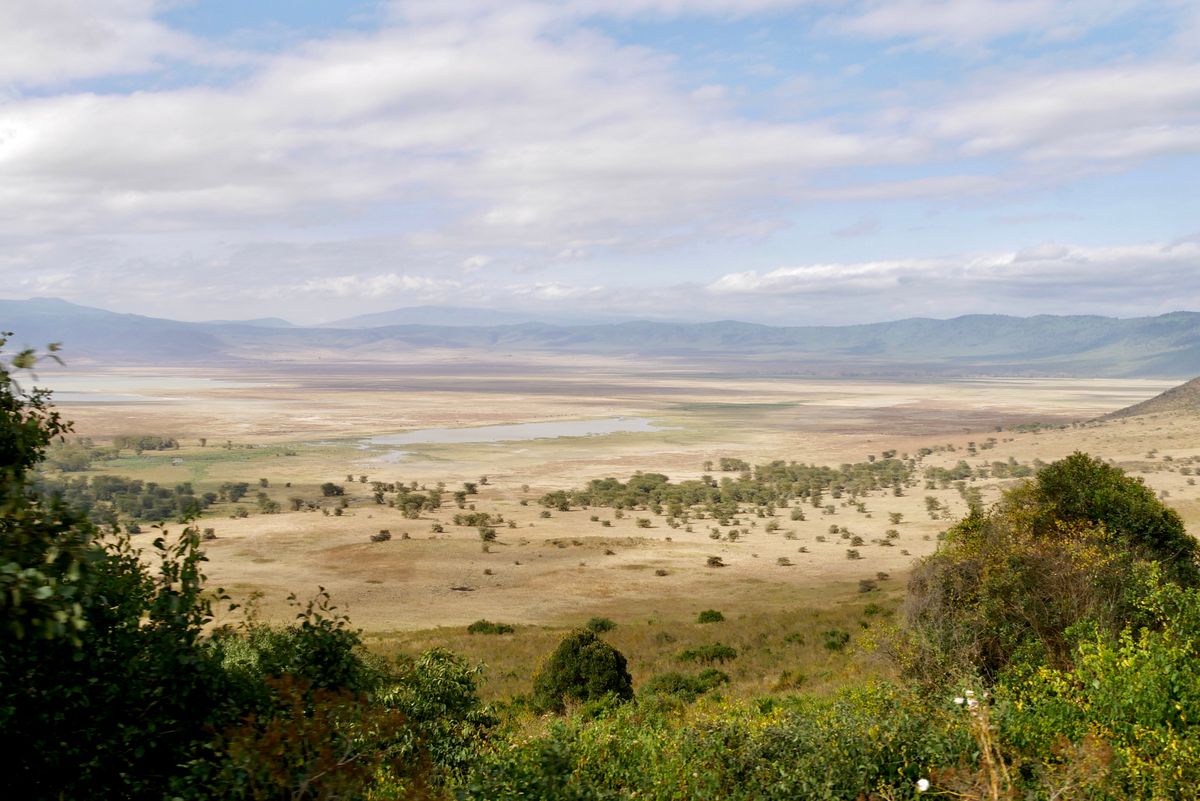
Panoramic view of the Ngorongoro Crater

The descent takes twenty minutes. The road drops 600 metres through mist and highland forest, and by the time you reach the crater floor, you are inside one of the most complete ecosystems on Earth.

The Ngorongoro Crater is a collapsed volcano — a caldera 19 kilometres across and 260 square kilometres in area — and what makes it extraordinary is its self-containment. The animals do not leave. Lions whose genetic isolation has given them distinct traits, elephant bulls that descend seasonally from the rim, a population of approximately 70 critically endangered black rhinoceros — all share a stage that is at once intimate and vast.

The density of wildlife on the crater floor is without parallel in Africa. In a single day, most visitors encounter the full Big Five, observe multiple predator species, and watch flamingos wading the alkaline shallows of Lake Magadi turning its shores a vivid, improbable pink. The crater delivers in a way that few wild places do — not with the searching uncertainty of the open Serengeti, but with the breathless certainty that something extraordinary is always just around the next bend.

What the crater cannot offer is the complete freedom of an open landscape. No overnight camping is permitted on the floor. Vehicles must stay on defined tracks. But these constraints are easily forgiven — the concentration of life within those walls is, if anything, sharpened by the frame that holds it.

Plan This Experience

  • Day trips only on the crater floor — no overnight camping permitted
  • Descent gates open 06:00, all vehicles must be back on the rim by 18:00
  • 4WD vehicle mandatory; no walking on the crater floor
  • Conservation fee approx. USD 70 per person per day
  • Combine with 1–2 nights on the rim for sunrise views into the caldera
03

Tarangire in the Dry Season

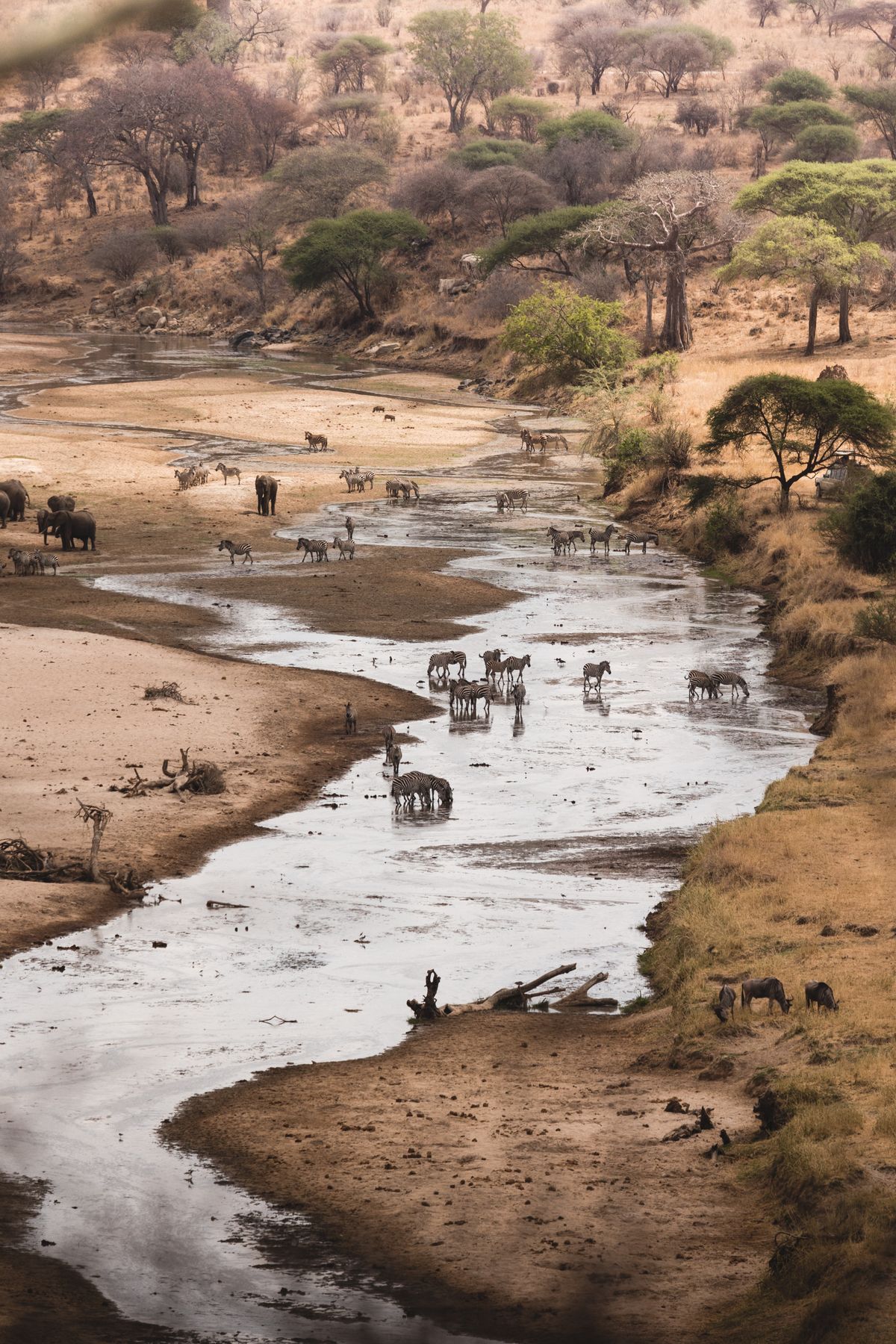
Animals gathering at the Tarangire River

By August, the Tarangire River is the only permanent water for hundreds of kilometres. Every animal in the surrounding ecosystem knows it. They come in their hundreds and their thousands, and Tarangire becomes the best-kept secret in Tanzania.

The park is named after its river, and it is the river that makes everything happen. As the dry season deepens and the surrounding bush desiccates, elephant herds numbering 300 or more converge on the riverbanks daily. Zebra, wildebeest, giraffe, and buffalo follow. The predators follow them. What results is a wildlife spectacle that rivals anything in the Serengeti — but with a fraction of the vehicles and none of the circus atmosphere.

What separates Tarangire from every other park in Tanzania is the landscape. The ancient baobab trees — some more than a thousand years old — stand across the golden plains like monuments to geological time. Their swollen trunks hold thousands of litres of water; their hollows shelter hornbills and genets; elephants strip their bark in the desperate, resourceful way that elephants do. At sunset, with a herd moving between the baobabs and the light turning the dust a deep amber, you understand why Tarangire's regulars stop telling other people about it.

Plan This Experience

  • Peak season: July–October; riverine wildlife concentration at its most intense
  • Fly into Kuro airstrip (TAN) from Arusha or Dar es Salaam in 45 minutes
  • Night drives permitted here — unique among Tanzania's national parks
  • Guided bush walks available with an armed ranger
  • Pair with Ngorongoro and Serengeti for the classic northern circuit
04

Night Game Drive in Tarangire

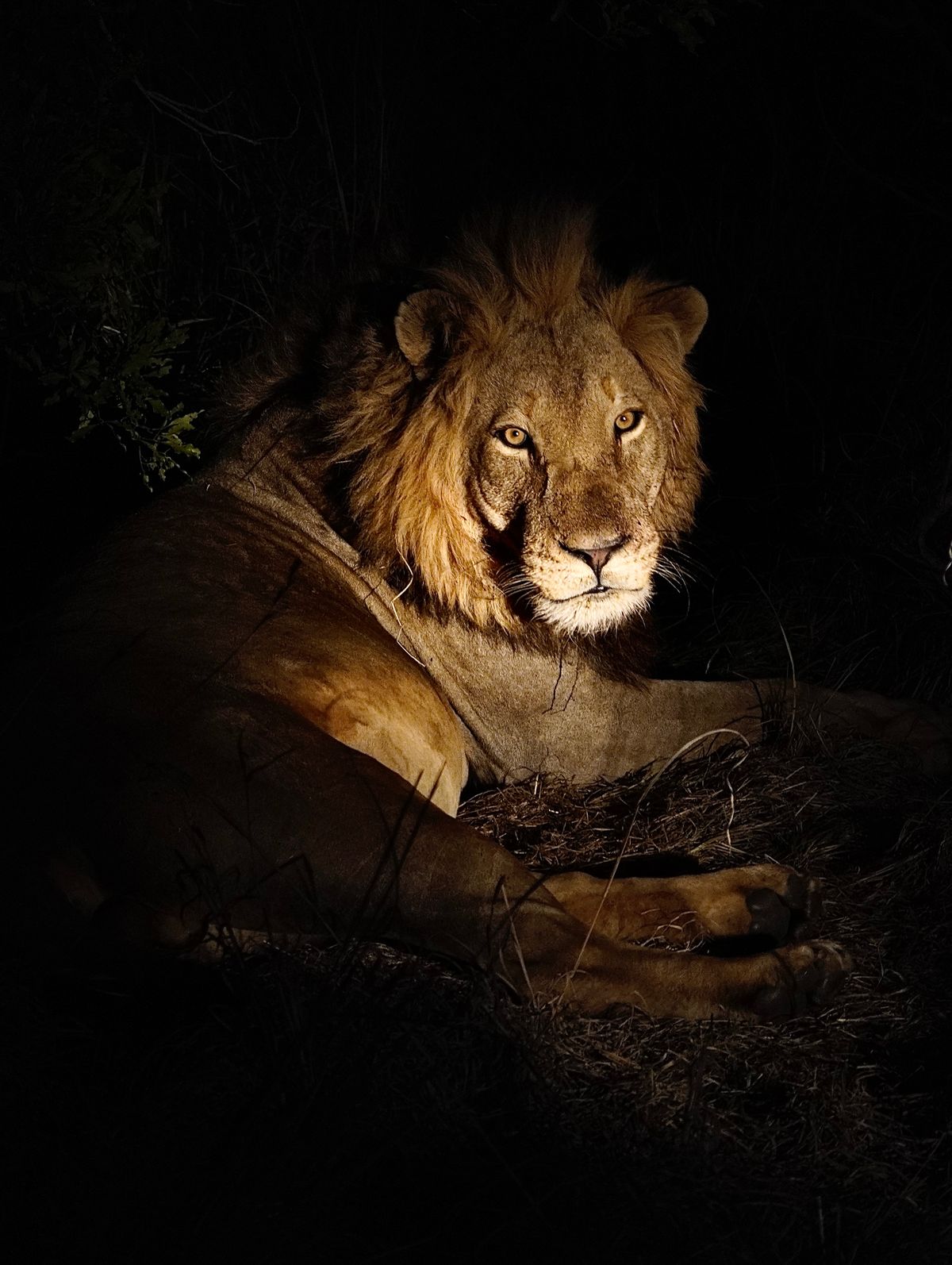
Lion resting at night in Tarangire

The day-visitors leave at dusk. The gates close behind them. And then, in the darkness that follows, Tarangire exhales — and becomes an entirely different park.

Most of Tanzania's national parks prohibit night drives. Tarangire is one of the very few exceptions, and the difference this makes to the wildlife experience is extraordinary. The majority of Africa's mammals are nocturnal. Everything the daytime visitor sees — the elephants, the lions, the giraffes — is actually the supporting cast for a much larger cast that only emerges after dark.

A spotlight sweeps across the bush and catches the eyeshine of a genet, small and spotted, poised on a branch above the road. A porcupine shuffles past, trailing its quills. Elephants move silently in the darkness with a grace that their daytime bulk makes hard to imagine. And then the lions — a pride that spent the afternoon dozing becomes purposeful, electric, alive in a way that the midday heat suppresses entirely. They are hunting. You watch it unfold from the vehicle, holding your breath, while overhead the Tanzanian night sky burns with stars undiminished by any light pollution for two hundred kilometres in every direction.

Plan This Experience

  • Night drives depart from 19:00 with certified guides; spotlights provided
  • Only available through licensed camps and lodges inside Tarangire
  • Fly camping option: spend a night on the plains under the stars
  • Wrap up warm — temperatures drop sharply after sunset
  • Bush walks also permitted at dawn — combine with a night drive for full spectrum

More Experiences

Ready to Plan Your Safari?

Every safari is different. Tell us what moves you and we'll build the right itinerary.

Start Planning