A collapsed volcano that became a natural Eden — the world's largest intact caldera shelters the densest concentration of wildlife on Earth.
The World's Greatest Caldera
"A fairyland, an Arcadia, a Garden of Eden" — those were the words of naturalist Bernhard Grzimek after his first descent into the crater.
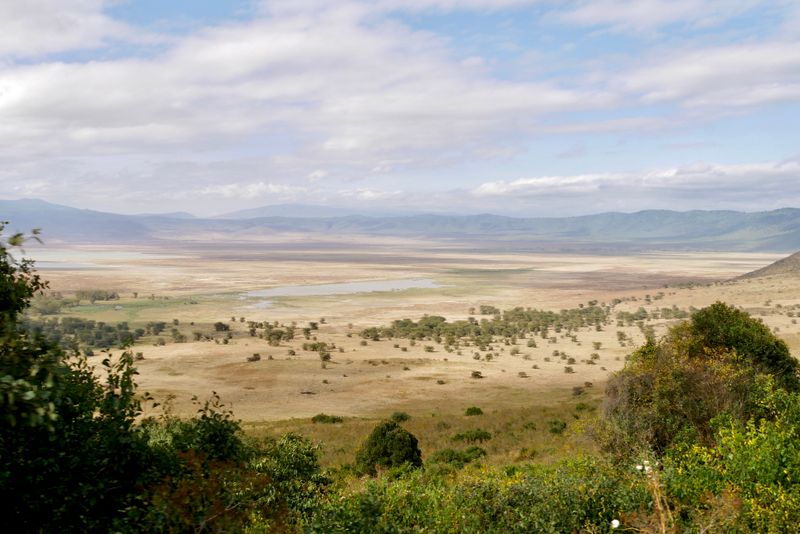
Three million years ago, a volcano as tall as Kilimanjaro collapsed inward upon itself, creating one of the geological wonders of the world. Today, the Ngorongoro Crater is a self-contained ecosystem — a bowl of savanna, forest, swamp, and lake enclosed by walls of volcanic rock, where approximately 25,000 large animals live in extraordinary density.
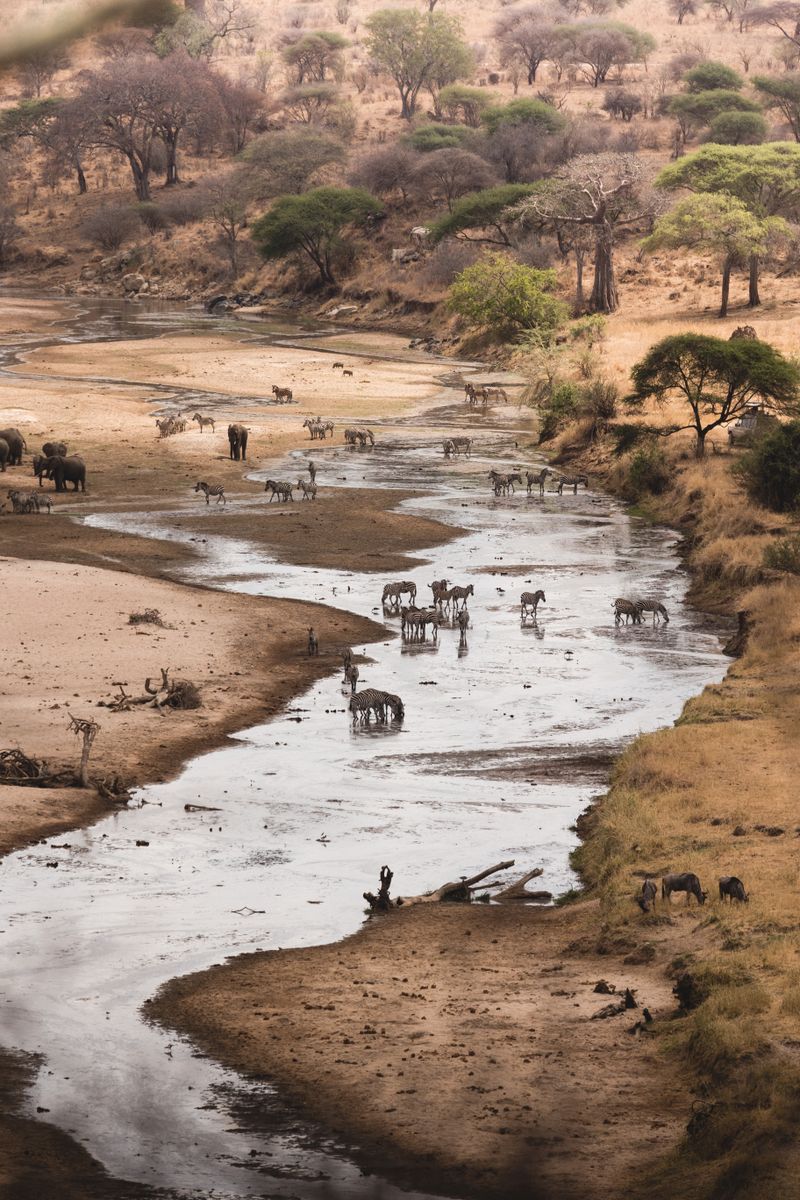
Unlike the vast open Serengeti, where you must search for wildlife across thousands of square kilometres, the Ngorongoro Crater delivers sightings of dramatic intensity within a compact, navigable space. Lions, elephants, hippos, hyenas, flamingos, and the rarest of all — the critically endangered black rhinoceros — share this ancient stage.
The Numbers
Crater Diameter
Rim Elevation
Black Rhino Remaining
Bird Species
Wildlife
Ngorongoro is one of the last strongholds of the critically endangered black rhino in Tanzania. Approximately 70 individuals inhabit the crater floor — one of the best places in Africa to witness them in the wild.
The crater's isolated lion population has developed distinct genetic traits. Prides are large and well-habituated to vehicles, allowing for remarkably close and extended encounters.
Large bulls with extraordinary tusks descend into the crater seasonally. The steep walls are navigated with remarkable ease — watching a bull elephant descend a 600m wall is humbling.
Lake Magadi and the Hippo Pool at Mandusi are permanent hippo havens. Hear their extraordinary calls echoing across the crater floor at dawn and dusk.
Lake Magadi's alkaline shallows attract thousands of lesser flamingos, turning the lake floor a vivid pink in the morning light — a surreal contrast against the crater's green walls.
Living Heritage
Unlike Tanzania's other national parks, the Ngorongoro Conservation Area is a multiple land-use zone where Maasai pastoralists have coexisted with wildlife for centuries. Roughly 80,000 Maasai live within the conservation area, grazing their cattle on the crater rim and in the highlands surrounding it.
Their presence adds a profound cultural dimension to any visit. The Maasai's traditional knowledge, vibrant ochre robes, and extraordinary relationship with the land offer a glimpse into one of East Africa's most iconic cultures — still lived, not performed for tourists.
Many operators offer visits to bomas (Maasai homesteads) as part of a Ngorongoro itinerary, providing direct economic benefit to local communities and a genuine cross-cultural encounter.
Plan Your Visit
Start Planning
One full day on the Ngorongoro Crater floor changes how you see the natural world. Let us help you plan a visit you'll never forget.
Plan Your Safari Request Ngorongoro Guide