The Roof of Africa. The world's tallest free-standing mountain rises from equatorial plains to glaciated summit — a challenge that transforms everyone who answers its call.
Roof of Africa
"Kilima Njaro" — in Swahili, most commonly translated as "shining mountain" or "mountain of whiteness."
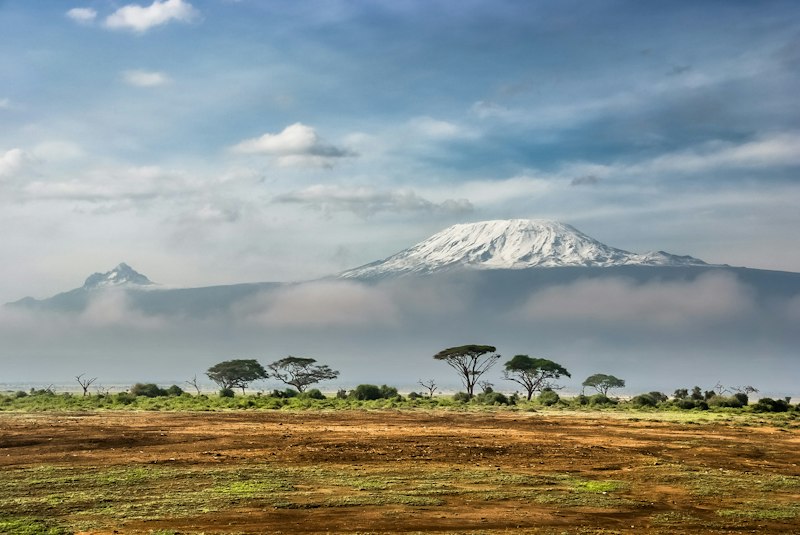
Kilimanjaro is not merely a mountain — it is a journey through five distinct climate zones in a single expedition, from tropical rainforest at its base to arctic glacier at its crown. At 5,895 metres, Uhuru Peak on the Kibo crater rim is the highest point in all of Africa, and the highest free-standing mountain on Earth.
Unlike many of the world's highest peaks, Kilimanjaro requires no technical climbing skills or special equipment. It is a demanding but achievable trek for anyone with determination, fitness, and the right preparation — which is precisely why it has captured the imagination of adventurers from every corner of the world for over a century.
Trekking Routes
Each route has a distinct personality — from the forested solitude of Lemosho to the iconic Machame "Whiskey Route." The right choice depends on your experience, timeframe, and what you want from the journey.
Known as the "Whiskey Route" for its demanding nature. Spectacular and varied scenery, excellent acclimatisation profile, and the most dramatic approach to the summit. Ideal for fit, adventurous trekkers.
The finest overall route for scenery and acclimatisation. Begins in remote forest, traverses the entire Shira Plateau, and approaches the summit from the west. Lower crowds, higher success rates.
The "Coca-Cola Route" — the only route with hut accommodation. The most accessible approach but the shortest acclimatisation profile. Best for those preferring comfort over camping.
The only route approaching from the north (Kenya border). Drier, quieter, and with unique views across the northern steppes. A great choice for the dry season when other routes can be wet.
The steepest, most direct route up Kilimanjaro. For experienced, very fit trekkers only. Rapid altitude gain means a more challenging acclimatisation but an intense, dramatic experience.
The longest and most complete Kilimanjaro experience. Circumnavigates the entire mountain before the summit push — unparalleled acclimatisation, extraordinary isolation, and every ecosystem fully explored.
Climate Zones
What makes Kilimanjaro extraordinary is that climbing it is like travelling from the equator to the Arctic in five days. Each zone has its own distinct ecology, colour, and feel.
800–1,800m
Coffee and banana farms, Chagga villages. Lush and fertile.
1,800–2,800m
Mist-shrouded montane forest. Colobus monkeys, giant ferns, birdsong.
2,800–4,000m
Giant heather, lobelias, and senecios. Otherworldly and vast.
4,000–5,000m
Rocky, barren, cold nights. The toughest acclimatisation zone.
5,000–5,895m
Glaciers, frozen volcanic rock, and the roof of a continent.
Plan Your Climb
Altitude sickness is the primary reason climbers fail to summit. Choose a longer route (7+ days), ascend slowly, and listen to your guide. Diamox (acetazolamide) can help but is not a substitute for proper acclimatisation. If symptoms worsen, descend immediately.
Begin Your Ascent
With the right preparation and the right operator, Uhuru Peak is within reach. Let us help you choose the best route, the best season, and the best team.
Plan Your Climb Request Kilimanjaro Guide